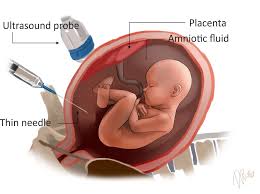
Chromosomal screening estimates the chance that a baby may have a condition caused by an extra or missing genetic material, most commonly Down syndrome (extra chromosome 21), Edwards syndrome (extra chromosome 18) or Patau syndrome (extra chromosome 13). These conditions usually occur by chance and can affect pregnancies at any maternal age, although the likelihood increases as maternal age rises above 35 years of age.
Why is screening done?
Screening can help parents understand their baby’s chance of a condition, decide whether they want further definitive testing, prepare for a baby who may need additional care, and plan pregnancy and delivery with the appropriate specialists. Screening is optional and should reflect each family’s values and preferences.
What screening options are available?
First-trimester combined screening: Usually performed between 11 weeks and 13 weeks plus 6 days. It combines maternal age, a blood test and an ultrasound measurement called the nuchal translucency. The result is reported as a chance, such as 1 in 1,000 or 1 in 50.
First and second trimester bloods only without ultrasound can also be used
Non-invasive prenatal testing (NIPT): A maternal blood test usually available from about 10 weeks. It examines placental DNA fragments and is the most accurate screening test for the common extra chromosome conditions. It remains a screening test and cannot provide a definite diagnosis.
How are results interpreted?
Low-chance result: The tested conditions are unlikely, but the result cannot guarantee that the baby has no genetic or structural condition.
High-chance result: There is an increased likelihood of the condition, but the result is not a confirmed diagnosis. Further assessment may include feto-maternal specialist ultrasound, genetic counselling, chorionic villus sampling or amniocentesis.
Inconclusive result: Sometimes there is not enough placental DNA for a result. A repeat blood sample, specialist review or diagnostic testing may be recommended.
Benefits and limitations
| Benefits | Limitations |
| • Safe for the pregnancy because screening uses blood tests and ultrasound • May provide reassurance • Can identify pregnancies that need diagnostic testing or specialist care • Allows time for planning and preparation | • Does not test for every genetic condition or birth defect • False-positive and false-negative results can occur • A high-chance result may cause anxiety • Cost and medical-aid cover for NIPT vary • Screening does not replace the fetal anomaly scan |
What happens after a high-chance result?
Your obstetrician may refer you to a fetal-medicine specialist or genetic counsellor. Chorionic villus sampling and amniocentesis are diagnostic tests that examine placental or fetal genetic material. They provide a much more definite answer but are invasive and carry a small procedure-related risk. A high-chance screening result should therefore be confirmed before irreversible pregnancy decisions are made.
Making the right choice for you
There is no single option that is right for every family. Discuss the timing, accuracy, cost, limitations and possible next steps with your obstetrician. Remember that a normal screening result does not replace the detailed fetal anomaly scan, generally performed during the second trimester.
